Communications
Getting Started With Inbound Marketing: Take Small Bites of the Basics

New Orleans Music - Inbound Marketing Basics
Today I’m blogging to music provided in the latest post of a very interesting person and ethnomusicologist (Google it. I did.) whose blog is called SocioSound. We ‘met’ through our blogs. Anyhow – SocioSound just shared five favorite New Orleans tunes. Two of them are also faves of mine by the Rebirth Brass Band.
I happen to have the album in my collection. So I’m going to share one of the tunes – Feel Like Funkin’ It Up — here and pass along an upbeat experience to boost you into the weekend. Of course, you control the play button so only listen if you want to.
All week I’ve been thinking that although social media and other online and inbound marketing techniques have been widely accepted and as they say, “…are here to stay,” there’s still a lot of learning to be done about the basics.
This morning I read a really interesting post about how people are using QR (Quick Response) codes in their marketing. I agree that the ability to help people connect with your website and various marketing offers by scanning QR codes with their mobile phones is very cool. But, for many, that would be running before walking.
Case in point: A bit later I had lunch with a newspaper editor friend of mine who scheduled a Twitter tutorial with me because she still hasn’t gotten up to speed. And Twitter is a particularly good tool for journalists. Plenty of people are still catching up with basic tools that have been around for awhile.
As I started to explore in yesterday’s post, there’s something new to learn virtually every day in online marketing and it’s truly difficult to keep up, even if it’s your profession. That’s why I’m recommending to many companies that they not worry about every new thing coming down the pike until they get the basics in place.
To me, the basics still begin with figuring out what you want to accomplish in your business. How many new customers to generate how much new revenue in what period of time? Once you know that, there’s existing technology to help you build and utilize a web presence to achieve at least some, if not all, of your objectives.
From what I can see, among smaller and mid-sized companies, very few are really using the web effectively for business development. Even though some studies show smaller businesses building Facebook pages at a pretty impressive clip, that’s only one small piece of a well-constructed online marketing program. And if you sell B2B, you may not want to be on Facebook at all.
It helps to take a look at the big picture first and then determine a logical plan for your company. If there’s a move afoot to update your website, you’ll get more bang for the buck if you take the opportunity to review your overall marketing.
Yes, your site is a central focus of online marketing. So explore what kind of site with what capabilities will contribute to success of the overall plan. Have the plan first. I still see lots of new sites with no SEO and people are till putting up sites built all in Flash, which search engines simply don’t see. So they can’t accomplish even the first step in inbound marketing – getting found.
Recently, I was speaking to a marketing director for an area business about inbound marketing and how it could be used in his industry. He was interested and requested that I get back in touch in a month. They were redoing their website, he said, and couldn’t undertake any other marketing until that was complete.
I suggested that a great time to begin developing an effective online plan is during the website redesign process. It would be unfortunate to invest in a website and then learn a month later that you should have gone in a different direction.
If you have a small company, invest an hour or two with a consultant who can give you a clear overview of the inbound marketing process — from making sure you can be found online right through closed loop analytics to assess the ROI of your efforts and improve where necessary.
Then you can begin to identify effective steps that are realistic for your company to accomplish. You don’t have to have the whole meal at one swallow. It may go down easier with everyone in your company if you take it one bite, then one course at a time, finally enjoying the fruits of your labors for dessert.
It must be the New Orleans music that made me finish with food metaphors. Have a tasty weekend!
Poster image by dingler1109 under Creative Commons license. I chose this image because it’s about a fundraiser to help the reconstruction of New Orleans and it also supported childhood learning – a concept not at odds with our learning the basics of Inbound Marketing.
Read Full Post | Make a Comment ( 1 so far )Emily Post Online: About LinkedIn Etiquette

Should Be Called Netiquette
I’m probably dating myself unmercifully by referencing Emily Post (who I learned about in childhood) in the headline. According to Wikipedia, Emily Post (1872 – 1960) was an American author famous for writing on etiquette. She is survived by the Emily Post Institute, which she founded and which subsequent generations – now fourth – of her family continue. Visit emilypost.com for all things etiquette and manners – in both personal and business life.
Well…almost all things. Though the Emily Post site has a Social Media tab, it serves to take one to the various Post social media accounts. I was hoping to find some tips for proper Web 2.0 behavior but did not. So I’ll just have to take a stab at recommending better etiquette for an incident that happened yesterday.
Working at my desk, I saw an email come in announcing that I had an invitation to connect on LinkedIn. When I looked at the invitation, which was from a woman currently running her own online business – a mom blog — here’s what it said:
Hello Ms. Becker,
Terrific article in the Fairfield County Business Journal! I am reaching out to you to inquire if you are currently looking to bring additional marketing communications professionals into your organization. I’d welcome the opportunity to discuss my experience with you. Thank you.
The ‘invitation’ referenced the monthly column I write on Inbound Marketing. At the end of that column – both in the print edition and online — is the email address where I can be reached. Additionally, my email address is in my LinkedIn profile.
To be blunt, I was offended at the use of a LinkedIn invitation from a total stranger to pitch herself for a job. If she had emailed me at the address provided, I would have, at minimum, been happy to steer her in some positive directions to find a marcom position.
Even if I were looking to hire right now – which I’m not – this unsolicited applicant would not be at the top of my list to work in a business that requires client representation and concomitant good judgment. At minimum, it requires that anyone I engage understands social media best practices. Now, in every way, the inviter used perfect Emily Post etiquette – addressing me as Ms Becker and saying ‘Thank you’.
But in terms of social media etiquette, even though she commended my column, her invitation was more about her needs. Rather than showcasing her knowledge of social media, she demonstrated the opposite. For me, LinkedIn is about mutually beneficial networking, not overt selling. I’ve blogged about this before.
I decided to try to contact the woman to explain my reaction and why I did not want to connect with her on LinkedIn. I have a responsibility to those in my network and I won’t connect with someone who might subject them to a similar approach to the one I received.
So I went to her LI profile (which is quite impressive, by the way), did not find an email address, but did find a link to the website she operates, where I hoped to find her email. The only option for contacting her was to fill out a form on the contact page. No email address.
By that time my desire to communicate my concerns about her invitation and maybe help her avoid turning others off in her job search went out the window. Instead, I decided to turn the experience into a blog post and maybe get some discussion going on LinkedIn etiquette.
Maybe the person in question will see this on LinkedIn where it appears in my profile, recognize her invitation and comment.
Do we have to build our networks thoughtfully on LinkedIn? Or, am I being too curmudgeonly about this?
Read Full Post | Make a Comment ( 2 so far )Independence, Liberty, Freedom – Not Synonyms

Of course you might know that if I do a post about Fourth of July, it has to have something to do with communication. I can’t help it.
I’m not big at patriotic flag waving. my connection to my country is an emotional thing deep inside. It gets stirred at odd moments. Like today we went to pick up mulch at a Home Depot near Jeff next to the Palisades Center Mall, a huge place with an iMAX theater, a traditional multi-plex cinema, hundreds of stores, and lots of restaurants and entertainment venues.
We saw hundreds of clean cut-looking young people walking across the parking lot from a slew of buses parked in a remote area. As they approached, we saw that they were wearing polo shirts with small patches on the pockets that said either West Point or Army on them.
We asked a couple of the group members what was up and they said, “Oh, sir and ma’am, we have the day off. We’re at liberty today.” The thought of these young people marching toward a mall to spend a carefree day at liberty after what I know is a tough normal regime for them, gave me that love of country feeling. How fortunate I was to be in the same place as these kids who will undoubtedly see some level of combat during their service.
So there’s a use of the word ‘liberty’ that took on special meaning on this day.
When I think of independence, I think about our responsibility to seek after our own ideas, to be accountable for ourselves and our actions — to work effectively within groups, but to be able to stand on our own two feet. And sometimes to be independent enough to ask for and accept help when we need it.
And when it comes to freedom, I think of it as our greatest blessing in a democracy like our own. Yet I also see it as a concept delimited by the needs of others in addition to our own.
My sweetheart, who served our country when he was as young as those kids today as a US Marine in Viet Nam during the Tet Offensive just pulled up on his Harley. He allows me the independence to take time from a holiday to keep up with some business chores and my blog and I’m going to wrap this up and go take a motorcycle ride. That feels pretty free, too – riding into the wind.
Just one other thought…Has anyone reading this ever attended a naturalization ceremony and been witness to people leaving behind allegiance to their birth countries and committing themselves to becoming U.S. citizens? It’s an amazing experience and I recommend it to all of you!
Happy Fourth!!
Image by West Point Public Affairs under Creative Commons License.
Read Full Post | Make a Comment ( None so far )Can Google+ Save Jazz?
For those of you who may not know, in addition to addressing how the Web is influencing the evolution of marketing, this blog is from time to time where I can share my passion for jazz. This post combines the two.

For the Future of Jazz
When it comes to creativity and discipline, there are no better role models than jazz musicians at the top of their game. Yet the number of venues where we can hear jazz in the US– where it was invented – shrinks every year. American jazz artists must go to Europe orAsia to achieve rock star (pardon the expression) status.
Last night we heard an awesome jazz quartet at the Village Vanguard in NYC anchored by the trio Renee Rosnes on piano, Peter Washington on bass and the spectacular Lewis Nash on drums. Every time I have such an experience, it makes me think about and hope for the future of the art form.
Could it be that Google+ – now in beta – holds the answer?
Because of my interest in this phenomenal music, I joined a LinkedIn group called Jazz in Business, which I’ve mentioned here before – as recently as yesterday. I started a discussion there by asking how members are using social media and the Web in general to promote and enable their music.
There have been a number of comments describing use of Facebook and Twitter to promote gigs and CDs. One member, Michael Gold, PhD, a brilliant jazz upright bass player who uses video Skype calls to teach and rehearse with students, posted a highly provocative comment. Michael, who performed in NY for years, has founded a consultancy called Jazz Impact in the Minneapolis area.
“We are at the beginning of a new business platform (in jazz).
Eventually the real-estate that houses clubs and performance spaces will be manifested in virtual space.
The challenge is to extract the core value of all that has worked in the past and reinvent it using the new tools that exist. That’s called creative destruction- a phrase coined by the economist Joseph Schumpeter in the 1940’s to describe what he saw as the escalating process of innovation brought about by new technologies.
Ultimately we’re all going to become “dot communists.” If we can just let go of the gravity of past (as in passed) success and look forward relentlessly, we’ll see it and we’ll make it emerge.”
With thoughts from last night about the future of jazz still fresh, I awoke today, got some coffee and went to my email, including Chris Brogan’s blog, which I read daily. Today he posted 50 observations about Google+ from his early explorations as an invitee to its beta.
Two jumped out at me that describe how a couple of Google+ features may change the entertainment and performance landscape:
- If Google Music integrates into this platform the way YouTube is now, it’s a powerful entertainment media platform instantly.
- How long before we see our first Hangout live music “jam?” That’s one record button away from being supercool. And one “name your price” Google Checkout tweak away from being instant micro content for sale.
As formerly ‘bricks and mortar only’ activities – including jazz clubs and festivals — are enabled to move online and access global audiences, there is hope for my beloved jazz and the amazing artists who sacrifice much to play it and keep it alive!
Here’s a link to NPR’s site where you can hear the Renee Rosnes trio’s performance on Jazzset along with vibes player Steve Nelson. Enjoy!
How do you envision the Web’s role in the future of music?
Read Full Post | Make a Comment ( 2 so far )
Writing as Conversation: 7 Do’s and 7 Don’ts to Find Your Voice
In previous posts I’ve mentioned my daily email vocabulary builder, A Word A Day (www.wordsmith.org). It’s free and if you’re blogging and trying to spiff up your writing, I recommend you sign up. A Word A Day also includes a Thought for Today, a wise quote from a variety of sources. This morning’s quote inspired this post.
“Writing, when properly managed, (as you may be sure I think mine is) is but a different name for conversation.” -Laurence Sterne, novelist and clergyman (1713-1768)

Writing as Conversation
I love the idea of writing as conversation. Straight from the 18th century comes a concept as fresh as though it were communicated for the first time in 2011. Contrary to the sales-y communications of traditional advertising, or the corporate-speak of the last generation (and in some cases the current generation) of company websites, or the overly-nuanced language of press releases, writing in a social, Web 2.0 world calls for a different – and conversational — style.
As I’m writing this, I’m thinking about you and wondering what you might have to contribute on this topic. Also, I’m hoping that you will add to it. We’re all learning new tools and new tactics everyday. So conversing to pool our knowledge, experience and wisdom is a very good thing.
When we communicate verbally, though, it’s easier to have our personalities come through. In addition to the visual cues in-person talk provides, it’s somehow more spontaneous when words spill from our lips and don’t require fingers on keyboards lagging behind a thought process.
Nonetheless, we’re all communicating in writing all the time these days – especially in emails, on blogs and on social media sites. So please allow me to offer a few thoughts about finding an authentic voice for written conversation.
- Do write as though you were speaking.
- Don’t over think the first draft. You can – and should – always go back and edit.
- Do share occasional personal thoughts, perceptions and experiences when they serve to illustrate a point.
- Don’t go overboard with personal info. Learn to walk a line that offers an authentic peek at who you are, while retaining a business-like decorum.
- Do use interesting words and turns of phrase.
- Don’t use industry jargon — and no off-color language.
- Do try for humor at moments that can benefit from a bit of lightening up or to poke fun at yourself for some human foible that anyone can relate to.
- Don’t make jokes at someone’s expense – including your own. Leave sarcasm and snark out of the equation. It’s not attractive.
- Do be polite. Welcome your readers, acknowledge them and thank them.
- Don’t be overly-solicitous; it’s not credible. Invite disagreement.
- Do be a cheerleader for others. Use your content to include their ideas and praise their achievements.
- Don’t promote your own stuff exclusively
- Do listen for what’s important to your audience/s.
- Don’t assume you know what’s important to others. Asking questions is divine.
And so I’ll conclude with this question…
How have you found your conversational writing voice?
Photo by Kris Hoet Under Creative Commons License
Read Full Post | Make a Comment ( 8 so far )Your Fabulous Face! Where is it?
We wouldn’t put bags over our heads to go to a party. But those who don’t provide an online photo in their content or social media interactions are performing the digital equivalent. The nature of social is that it’s not anonymous.
Here’s what prompted this post. This morning I had a few emails from Twitter announcing new followers. Two of them had the default Twitter egg icon where a photo of the person should have been.
Now, I always check out the profiles of people who follow me to see if their tweets are interesting to me and add to my knowledge or extend my reach to a particular community or network. If so, I’ll follow back.
However, when the Twitter email shows an egg next to the Twitter handle, I rarely do. I like seeing who I might be creating a social media relationship with.
After checking out the Twitter follow invitations with photos, I went over to Linked In to look at the list of suggested folks I might want to invite to connect. There were so many blank spaces next to names where photos should have been. That means that there was no photo on those people’s profiles either. I found myself sending invitations only to people I could see.
In one of those moments where you say, how come I didn’t think of this before, it dawned on me that lots of people still don’t understand the importance of a photo in social media – or simply don’t know how to get one up there – and maybe I could be helpful to them by writing a post about the importance of photos.
If your fabulous face is already online, great. Please pass this along to any friends who may still be faceless. If you don’t have a photo online do it today. If you’re concerned that it’s too time consuming to upload a photo for every blog you comment on, social media site you join or the many other online activities you engage in, I’m going to make it easy for you.
Just go get a gravatar – a Globally Recognized Avatar. Navigate to www.gravatar.com, open a free account – which takes a minute or two — upload the photo you want to use to represent you online and voila!! In a short while, your gravatar will follow you all over the web – almost wherever you go.
Just a couple of tips – use a head shot – not a full body image. Your gravatar will appear as a thumbnail and full body shots can barely be seen. Make it friendly. Smile!! Unless you’re creating a gravatar for a business where a company logo would be appropriate, use your own face. Not a cute picture of your puppy or your favorite flower or whatever.
Aside from being more social, the best reason to get a gravatar on line is that a picture is more memorable than an online handle. In fact, you may have numbers of online handles – but you only have one face. Your gravatar becomes your individual logo. As you leave your mark around the internet, you’ll become a recognizable Brand You!
By the way…today’s musical post is That Face, written and sung by Alan Bergman, half of a legendary composing duo with his wife Marilyn – for whom he wrote the song and won her heart!!!
Read Full Post | Make a Comment ( None so far )In Defense of True Journalists
First, apologies. I promised this post would follow up the last with a system for online marketing. I’ll deliver that next post. Today, however, I attended an event that got me thinking about journalists and what they’re going through in the evolution of media and have some thoughts to share.
This afternoon I attended the annual meeting of the Fairfield County Public Relations Association, a PR professional organization founded in 1958. I proudly served as its president in the mid 1990’s.
Coming out of the PR profession, I’ve spent my career interacting with journalists, offering them story ideas, articles and sometimes just the camaraderie of people who make up two parts of an equation.
As much as the rise of the Internet has changed the lives of PR people, I believe it’s changed life more for journalists. I recognize that the web lets me take my clients’ stories directly to their constituents. I can bypass the media and go direct to our audiences with useful information that they will embrace.
I blog and write a monthly column for a business journal. I share with you my experience, expertise and take on what’s going on in the online marketing world. But I’m not a journalist and don’t pretend to be.
I truly hope the definition and characteristics of true journalism stay alive. Journalists are committed to reporting the facts. They vet their sources. They report on what’s going on more than they opine. They’re trained to have a nose for what’s newsworthy. So do PR people, but journalists are charged with digging to get both sides of an issue, rather than advocating for only one side of the story.
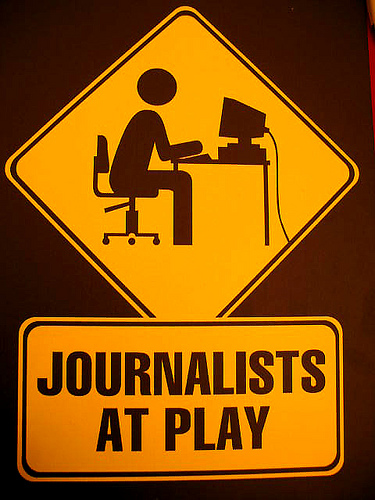
Journalists play a key role in our democratic society
The keynote speaker for today’s meeting was Julia Hood, president of the Arthur W. Page Society, a membership organization for senior PR and corporate communications executives. Julia pointed out that PR people are supposed to advocate for our clients, despite recent crises to the contrary (i.e. Facebook/Burson-Marsteller). It’s our charge to be truthful, but not necessarily impartial. That’s the role of journalists. Nonetheless, I’ve seen fabulous reporters dumped from newsrooms as daily newspapers struggle to evolve and figure out their role. Who will take up that slack?
The incoming president of FCPRA, Marian Salzman, CEO of Euro RSCG Worldwide PR, North America pointed out rightly that, although corporate America has lagged behind, hyper-local is the current focus of people and the media that reflects their interests. Hyper local media is experimenting with combining professional and citizen journalism as a way to cover the local news, taking advantage of expanded digital platforms.
That’s interesting and it’s good that they’re employing some journalists, probably not at great pay levels. But I hope we don’t lose the desire to support the kind of skeptical, truth-seeking journalists I’ve discoursed and partnered with to get great stories out, negotiated and disagreed with over newsworthiness and whether something represented a trend, cursed out under my breath when they just didn’t get something I thought was important.
Many of these incredible pros have been riffed out of newsrooms because of downsizing. I spent time with a few today. PR leaders like Bob Dilenschneider have added some of these amazing – now former – journalists to his global PR consulting team. I am intrigued about what they in conjunction with an evolving PR profession will envision together for the future.
What they provide needs an ongoing place in our culture and our political system. It’s not melodramatic to say that they are at the heart of our democracy — moreso than any politician who claims that turf for him- or herself.
Read Full Post | Make a Comment ( None so far )How to Succeed Online – But Not Without Trying
The other night I watched the Tony Awards. I’m really not a fan of awards shows, but living not far from The Great White Way, the Tonys give me a preview of what I might want to grab tickets for. What do the Tonys have to do with online marketing? Nothing, really, but one of the featured shows sparked my thinking for this post.
I’ve considered seeing “How to Succeed in Business Without Really Trying.” I saw the original with Robert Morse and the last revival with Matthew Broderick. So I wanted to watch a number from the current revival starring Harry Potter himself, Daniel Radcliffe.

Daniel Radcliffe needs Wizarding Ways to Succeed in Online Marketing Without Trying
As I waited for the segment, I thought about how many people I’d spoken with about inbound marketing during the business week who said, “Yes, but isn’t that a lot of work?” If the name of the show were “How to Succeed Online Without Really Trying,” Mr. Radcliffe would be wise to hang on to his wizarding ways. Because that just doesn’t happen in the real world.
Using your web presence to build revenues entails an array of efforts. But so did a well integrated traditional marketing program when people didn’t have voice mail, tiVo and other ways to avoid the marketing messages we pushed out. When it comes to online marketing, I think that people still don’t feel comfortable with the some of its elements. Maybe they’ll pick one or two things like being on Facebook or LinkedIn. But that’s not enough.
It starts with understanding your customers, recognizing that they’re already online – and that’s where you have the best chance to connect with them. Of course you have to do a bit of homework to find out where on line they are. The Internet’s a big place after all (World Wide Web, remember?)
But the Web is also a very searchable place; so finding them is do-able. Then you have to attract them, give them reasons to trust you and respect your knowledge, and be the company they turn to when they’re ready to buy.
It is a process that takes a lot of work – although it’s not as much as many may imagine. You may have to do some things that fall outside your comfort zone, like write a blog on a regular basis, or share your expertise in Twitter tweets. But I’m sure that the added revenues will more than make up for the time investment. Once you buy into the logic and have a plan, you can succeed. You just have to try!
Now having a plan and a system is the key concept here. I’ll talk more about that in the next post.
Do you have an online marketing plan? If not, what are your roadblocks??
Read Full Post | Make a Comment ( 4 so far )Give Pieces a Chance: A Case for Integrated Marketing in the Digital Age
Here are a few disparate but related thoughts that will roll into the topic of this post – how to make integrated marketing a reality. Today’s musical post is Pieces of Dreams, a jazz standard sung by Sarah Vaughan, backed by the orchestra of Michel Legrand, its composer.
The song title connects to the post title: Give Pieces a Chance. Now, I could have selected the John Lennon/Yoko Ono hit about ‘peace’. But I really wanted to stick with the idea of ‘pieces’ – read ‘tactics’ — and their relationship to successful integrated marketing.
So, the Legrand song seemed to be a better tactical choice in support of my strategic objective – to start a useful discussion about integrated marketing. Also – I believe that true integrated marketing is sitll a dream. And – the song had double appeal because an excellent jazz band Pieces of a Dream – who hail from my home town of Norristown, Penna and used to play at our family’s parties – derived its name from this same Michel Legrand tune.
Call me sentimental! Marketing is about emotions after all! But there’s definitely an intellectual piece first…
Integrated marketing in the digital age. Here’s why I decided to write about it again. Earlier today I read and commented on a wonderful blog post by Jill Adams, CEO of Adams & Knight, an integrated marketing agency. Her post was titled “Stop Chasing Digital Crazes: Tomorrow’s Top Brands Will Be Led by Fusion Marketers – Not Social Media ‘Gurus.’”
After reading her post, what I recognized is that the integrated marketing battle is no different today than it’s ever been — except for the fact that we have many more tactical tools to choose from and that there is more of a willingness to at least consider blurring the boundaries between various marketing disciplines. Historically there have been turf wars for both budgets and bragging rights among various contributors that have negatively impacted results.
Even though I come out of PR, I’ve made it a point to understand the big picture in order to be able to support various marketing pieces with media visibility. ‘Big picture’ is the operative term here because you have to see the big view to identify overall objectives and strategy. Then it’s a question of having a big tool box. No one person can implement all of the important efforts, so we need to collaborate with trusted colleagues who can bring their expertise to bear – everyone with an eye on what will move the ball ahead to the objective.
What will work is different for every project, assignment and initiative, which takes flexibility and ever greater creativity. What’s most important for success is how we think about each effort. THINK!!!!!!! Thinking is at the root of the creative process. It’s not what we know about Twitter or Facebook or a flave of the week digital offering that will achieve success for our brands.
Yes we have to keep informed as never before because everything cycles through so fast. But we have to think about what we want to achieve, what the best tools are to get there, who else we need to collaborate with to make it happen. If we don’t think about the tactical pieces of what we’re doing in terms of the strategic whole, they’ll never have a chance of getting us to success.
Now this post has been very theoretical. Next time I’ll share some recent client projects to give you a more practical view of marketing integration.
Please jump in to share how your strategic vs tactical thinking works – whether or not you’re a marketer.
Read Full Post | Make a Comment ( None so far )What’s the Semantic Web? Watch Jeopardy!
Over the past couple of years I’ve attended several presentations on Web 3.0 – aka the Semantic Web – which has been touted as the next great thing online. Unfortunately, the presenters were all tech people who were unable to really explain, “What is it?”
Last night I got a really good idea when I watched IBM’s latest challenge to human intelligence, the computers collectively known as ‘Watson’, play ‘Jeopardy!’ against two of the show’s all-time top winners – Ken Jennings and Brad Rutter. The result of the first of three nights of competition was a tie between Watson and Rutter. A stunned Jennings came in a very distant third. (In honor of Watson’s ‘maiden voyage’, today’s tune is Herbie Hancock’s tune of that name played by the composer and a stellar quintet. You’ll finish reading before it’s over, but stick around and listen if you’d like.)
Until last night I had the general sense that the Semantic Web had to do with contextual responses to search queries. In other words, currently search engines simply find keywords in text on web sites and blogs that seem to match a query. Applications on the semantic web would determine the meaning of the query, text or other data and then create connections for the user. Still not so clear.
I did a Google search for ‘example of semantic web search’ and it yielded a mess of results – none of which really answered my curiosity. However, the Wikipedia result offered at least a true vision of the Semantic Web as described in 1999 by Tim Berners-Lee, director of the World Wide Web Consortium and coiner of the phrase. In an online parallel to Martin Luther King’s famous speech, he said:
“I have a dream for the Web [in which computers] become capable of analyzing all the data on the Web – the content, links, and transactions between people and computers. A ‘Semantic Web’, which should make this possible, has yet to emerge, but when it does, the day-to-day mechanisms of trade, bureaucracy and our daily lives will be handled by machines talking to machines. The ‘intelligent agents’ people have touted for ages will finally materialize.” (Interesting note: If you click on this ‘intelligent agents’ anchor text it will take you to another Wikipedia page that will confuse the hell out of you. ;-})
Anyhow, last night I watched in amazement as Watson properly interpreted most of the questions, ‘pushed his response button’ and weighed in first with correct answers (actually questions in Jeopardy! terms) in an appealing non-computer-y voice. And I got it! This is what the Semantic Web will mean. Actually it reminded me a bit of Oz behind the curtain. 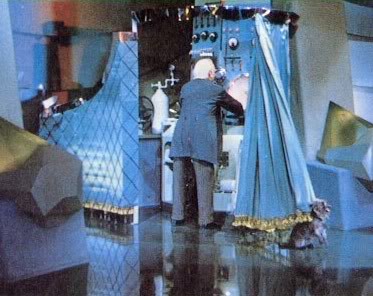
And an article in today’s Boston Globe described the game show experiment in more specific terms, “IBM scientists launched the Watson project to test whether a computing system could rival a human’s ability to answer questions posed in natural language with speed and accuracy. The “Jeopardy!’’ format was chosen because the game’s clues require analyzing meaning, humor, riddles, and other subtleties that humans can process, but are difficult for computers.” Difficult until now it looks like!
I’m looking forward to tonight’s continuation of the man-machine contest and its denouement tomorrow evening. Even though Watson appears to offer an exciting peek into the future, I can’t help but root for Ken and Brad. May the best – er – intelligent agent win!
Read Full Post | Make a Comment ( 3 so far )« Previous Entries Next Entries »


 New PR Words - and Music!