Inbound Marketing
Networking Online and Offline: Anatomy of a Great Day

A Day Of Networking is Energizing
Today was a marathon networking day with both online and offline communities that are important to me – and to my business.
Early this morning I read blogs I subscribe to including Chris Brogan, Seth Godin, my ethnomusicologist Sociosound and my rock ‘n roll management guru Peter Cook who posted a brilliant satire on blues lyrics that started my day with a smile.
Then I went to my Twitter profile to connect with some new folks who followed me yesterday and made initial contact. Next, I sent a few invitations to people I want to connect with on LinkedIn – and accepted some invitations that came in overnite. And I received notices that people who I put into Google+ Circles yesterday on my first interaction with that new social network had put me into circles of theirs.
At noon, I arrived at the Riverside Yacht Club inGreenwich,Connfor the summer luncheon of Thursday III, a professional group of senior PR executives and consultants. The group is fascinating and stimulating. The members are authors and PR icons who guided communications for Fortune 100 companies, major agencies and presidential administrations. I fall only marginally into any of those categories and am honored to sit at lunch with these brilliant and creative people every other month. The stories and the knowledge sharing that happens in that group is the stuff that NY Times bestselling books are made of.
A delightful aspect of the luncheon was that I sat between Ed Bloch who was a PR executive for Perkin Elmer and Ian Kerr who led important PR agencies in Fairfield County and represented luxury global brands including Jaguar and Rolls Royce. Both Ed and Ian are beloved figures in the local and broader PR community. Both have wry senses of humor that make them really enjoyable lunch partners.
Ed Bloch subscribes to this blog and noticed my increased frequency of posting. He good-naturedly teased me that my posts were piling up but that he intended to read them. I gave him some suggestions of how he could work them into his day – including bathroom reading, I’m afraid to admit. I’m including him in this post partly so that I can tempt him to read what I said about him when I post it.
After a bit of catch-up in my office, I met with Connecticut Networking Group www.ctconnected.org. This is a spectacular high-level group of mostly young and accomplished business people – entrepreneurs in fact and at heart. We’re more an advisory board to one another’s businesses than a so-called leads group. Again I’m something of an outlier as I’m a bit senior to most of the members. We get to know one another so that we can refer each other with confidence. We share a consultative and relationship-building approach to business development.
Going from my seasoned PR colleagues to my young, energetic and exceptional networking group was a particularly rich experience; so much valuable input across generations.
After the CNG meeting, I went to a meet-up event on a big paddle wheeler on the Norwalk CT harbor – across from my house. This was a big open group where there were a few people from my established network and many whom I didn’t know. Unfortunately this event was not well organized – in particular, no name tags that would have facilitated and focused networking. I jumped ship right before the group took off for an unannounced harbor cruise – in favor of coming back to the office and posting to my blog and attending to other to-do’s.
All in all, this was a very positive day of connection. We never know what may come of a day like this. But who cares. It re-charges the engines to engage with our communities, reconnects us with people who add to our lives and gives us the opportunity to widen out our circles. Time well spent in my book.
Please share your on- and offline networking experiences.
Image via cambodia4kidsorg under Creative Commons license.
Read Full Post | Make a Comment ( 4 so far )Tuesday Tweets

Perfect Tuesday Tweets Graphic! Thanks to Freshalex Online Under CC License
AppJudgment @AppJudgment This iPhone Survived a 13,500-Foot Fall http://gizmo.do/qddCFM
Couldn’t help but click to see what this link might hold. Pretty wild. I’ve seen iPhones that worked for awhile after the screen was smashed – but they had fallen out of a car – not from the sky. Put this story into the A-mazing category. Some of the comments will give you a real giggle!
CoachNotesBlog CoachNotesBlog by GrowMap I voted for @GrowMap in the #SMBinfluencer Awards – please vote! http://t.co/0qbVStD via @SmallBizTrends #smallbusiness #socialmedia
I don’t know about you, but for me the quantity of @names, links and hashtags gets in the way of meaning. I couldn’t make myself read this it looked so confusing and unapproachable. Once in awhile you have to pass on an audience or consider sending a couple of tweets in the interest of people understanding what you’re trying to communicate.
WSJBusiness @WSJBusiness WebMD Lowers Its Outlook http://on.wsj.com/qw2T8O
As someone who has done a lot of work marketing in the medical sector and in healthcare technology, I’ve followed WebMD closely. This nice clean tweet of potential alarm from the Wall Street Journal grabbed my attention. I followed the link to a précis of the article which implied the problem is attributed to loss of customers for WebMD’s private portals – rather than the well-known public site. In addition to picking up a good morsel of info – I gave Rupert and James Murdoch a chance to entice me to subscribe to get the full story. I declined after tuning in for a little while to their testimony before Parliament earlier today.
JulieTNL @Julie Lead Generation: A closer look at a B2B company’s cost-per-lead and prospect generation http://lnkd.in/s4yBQc
As an inbound marketer, I feast on lead generation case studies. This tweet definitely got my attention. I was pressed for time when I saw it and almost passed, but them took the time to look. @JulieTNL had plenty of characters left to say the link was to Marketing Sherpa – a respected source that lots of us IM consultants read. I had seen and saved this post. A bit more info would have saved me the time of clicking. In this case less might not have been more. I’m guilty of this, too and will pay more attention to letting the choir know when I’m singing songs to them that they may have already heard.
JasonPeck @JasonPeck In case you missed it: Lucky Charms, Count Chocula, Super Mario and social media/email motivations in the same post: http://ar.gy/UM0
I met @JasonPeck almost three years ago at the Inbound Marketing summit inBoston. I’ve been following his tweets ever since. He knows his Web marketing stuff and shares good info. I also enjoy seeing him get all excited when one of the sports teams he follows is in the playoffs – or the dumps. The tweet caught my attention for two reasons. The headline was compelling and Jason posted a gravatar I hadn’t seen before – sporting a cool western hat. I’ve had the same image up for a long time now. Maybe it’s time to freshen up my online persona.
Read Full Post | Make a Comment ( None so far )
Put Your Company First This Week to Drive Client Success

Make Marketing a Business Priority
Welcome to Monday. After a very lovely weekend break – my darling Jeff and I jumped on the Harley and did 150 miles each way on an overnite to the Berkshires – I’m back with my nose to the grindstone. First on my agenda is how do I move my business ahead this week? I consider this a fundamental focus for getting better results for my clients.
Following is my list – in priority order – for today. You’ll notice that before I implement one client project, I’m focused on my own marketing. If I don’t ensure that I can keep my company moving forward, I can help no one else. And then my company has no reason to exist. After Monday I spend more daily time on client projects, but I dedicate time each day to my own marketing — and so should you.
Monday morning:
- Write a blog post for publicizing and publicizing later in the day. (This is the one for Monday)
- Check my website and blog stats and see what’s resonating with my audiences. Based on that, establish marketing objectives for the near and longer term.
- Read and comment on trade blogs and news to keep abreast of market developments.
- Write/Edit my co-authored column for theFairfieldand Westchester County Business Journals.
- Write collaborative letter for joint marketing affiliation.
- Spend time on my Hubspot content management system to plan traffic and lead generation and lead-nurturing campaigns.
- Touch base with affiliates and networking groups and set personal get-togethers for the week.
- Work on responding to requests for proposals.
Afternoon:
- Read and reply to imperative client emails.
- Review projects and create client to-do list for the week.
- Work on strategies to meet client objectives.
- Research, write, review, edit, publish client content and perform SEO activities as required by online project timelines.
- Email clients to obtain sign-offs on previously submitted concepts and content to move projects forward.
- Make calls to clients to expedite project issues that are better served by phone that email.
Although the list seems longer for a.m. activities, there are far more moving parts in implementing successfully for clients.
The point of this post…Our clients are our primary focus, but if we don’t put our own businesses first for at least a morning a week – and for some concerted time each day, we’re abdicating our ability to remain successful contributors to the business world.
Image by Banalities under Creative Commons license.
Read Full Post | Make a Comment ( None so far )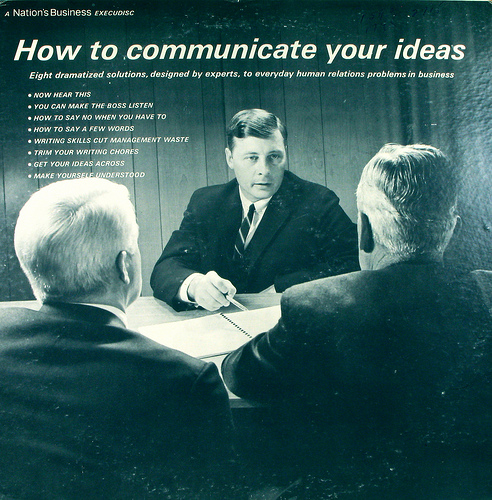
Online Lessons from My Offline Networking Group
I belong to a networking group that I experience as exceptional. We’re all in service businesses. Some of us are business owners. Some of us work for companies. But we’re all entrepreneurial at heart.

Not! Networking Takes Time!!
We’re all competent at our businesses. We share high ethical standards and values. We found each other in the wider world through introductions, networking events introductions from other trusted connections. We identified each other as people that we want to ‘follow’ – to borrow the online concept.
Our group is not about trading leads. It’s a longer term play. It’s about getting to know one another. It’s about building confidence and trust. It’s about learning enough about each other that we can recognize good opportunities for other group members when confronted with them.
We span demographics of age and gender. We maintain decorum but are comfortable enough with one another that we can let down our guard and be human. We exist to help one another, understanding that the sharing will help our individual businesses.
When I build online communities for myself and for my clients, I think about the principles behind my offline network and try to approach online community building with the same sense of shared interest and generosity.
You can learn more about our group model at www.ctconnected.org. Feel free to borrow. It works.
Do you have an offline networking group? Tell us about it and how it helps you to build your business.
Read Full Post | Make a Comment ( 1 so far )Online Marketing for Small Business: Helping a Diverse, Ill-Defined Group
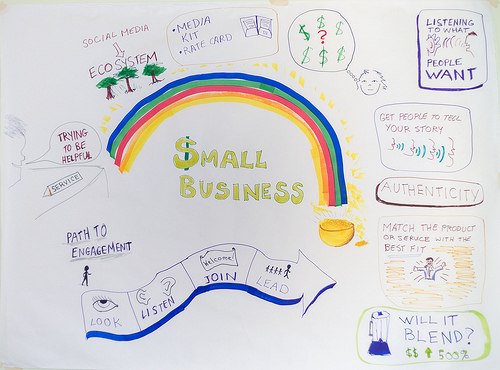
Regardless of definition, small businesses need help putting it all together online.
Because I write for this blog for small businesses – a very ill-defined segment –I’ve decided to talk today about who you are from my perspective. You’re a group that ‘s quite misunderstood in terms of your diverse human characteristics – everywhere from government statistics to media coverage. Truth is, you’re not a monolithic group, but you do face similar marketing issues.
Although I keep up with the latest advances in web technology on your behalf, as I speak with you, I know that’s not necessarily what’s top of mind for you. Most of the companies I’m working with – or who are calling me in to help them get to the next level online — are very savvy. They have an earlier generation website, they have social media channels going, they’ve set up an ecommerce store, they’re doing email campaigns, have attended LinkedIn seminars. They know that online is where the world is and will continue to go. They’ve done the best they can.
But they need help figuring out how to make it all pay off for their businesses and how to organize online marketing into a manageable system. Time and limited resources are the enemy.
I can also tell you that small businesses defy easy categorization. We all see references to SMSB – Small to Mid-Sized Businesses. But the definitions of who they are and how small/large these companies are is all over the map. Attempts are made to define them by revenue, number of employees and other metrics. But in my experience, that’s not enough. So who are they?
Here are some of the varied characteristics of small businesses I’ve worked with:
- Main Street mom-and-pop bricks-and-mortar stores marketing locally.
- Start-ups with great ideas or products and bootstrap budgets.
- Established businesses with a few employees that market nationally or even globally.
- Growing regional companies building infrastructure.
- Exciting businesses – and nonprofits, too — transitioning from the original entrepreneurial founders to management with next-stage experience.
- Established bricks-and-mortars launching ecommerce divisions.
- Start-ups with angel funding.
- Divisions of larger companies with Round ‘A’ venture funding.
- Entrepreneurships with varying levels of experience and previous success.
- Billion dollar enterprises with three employees looking for the right kind of strategic marketing help.
- Manufacturing and service companies with revenues up to 150 million dollars.
- Established innovators ripe for acquisition with the right positioning and visibility.
- Any and all of the above trying to gain recognition for any number of strategic and tactical reasons.
What you and the aforementioned small business types share is that you need scalable help making the web work for you. Regardless of revenues or budgets, you have limited time, staff and/or budget resources and need to get effective and efficient outside advice and/or implementation help.
The objective of this blog is to help you understand the current and emerging environment, for sure, but at a level that does not forsake the practical advice that will help you make the best use of what you have available.
Conversation is part of the equation, so please continue to send your comments, questions and ideas.
Image from deanmeyersnet under Creative Commons license.
Read Full Post | Make a Comment ( None so far )Tuesday Tweets

Let's tweet in harmony!
Welcome to Tuesday Tweets where we take a look at tweets from my Twitter feed for do’s, don’ts and best practices. Keep in mind that what we examine here is in no way personal. We’re all learning about building audiences online. In that spirit, if you disagree with my assessment, let me have it! I’m learning, too!
Tweet 1.
- @recovengineer Conflict Resolution Lessons From A Lifeguard: A Drowning Man Doesn’t Care About You http://tinyurl.com/3d85rwp #leadership
I retweeted this. The tweet was provocative. And when I clicked on the short link, the post behind it was meaty and full of psychological analysis – very interesting to me. Whether it is to you or not, the point of this review is that if you write it right, you’ll attract the right people.
Tweets 2. and 3.
- @michaelbathurst Dismantling Fukushima reactors will take decades: Japanese expect it will take decades before the FukushimaDaii… http://bit.ly/ogFMpz
- @michaelbathurst Missing woman a murder victim: The body of a young woman found over the weekend near Uxbridge has been identifi… http://bit.ly/pfuNGb
Sometimes you follow people because they follow you. Putting together this week’s Tuesday Tweets, I focused on these two consecutive tweets from @Michaelbathurst. All of a sudden I said to myself, why am I following this user? I went to his Twitter profile to see if this was a fluke and it wasn’t. The bio said, ‘We are living in very exciting times. All walks of life are opening their hearts and minds to understand the nature of the universe.’ And there was a link to a Follow Friday popularity website. Nothing wrong with any of the above and he has about 25,000 followers. But the time I spend on Twitter is focused in a different direction. Moral of the story…You can always click ‘Unfollow.’
Tweet 3.
- @Alex_Carrick Calling it a nite. Sweet dreams @Donna_Carrick & all T-pals in Eastern Time Zone. Every1 else please don’t stop (as if you would). Tweet on!
I don’t know. What do you think? A lot of people sign on and sign off of Twitter each day offering good mornings and I’m having coffees and time for an afternoon siestas and good nights. And plenty of people who have great social media credentials.
My vote is out. While I believe in a consistent presence on social media that are relevant to your audiences, having the feeling that people live their lives on Twitter or any other social media makes me question their sense of balance. Would you hire a consultant who tweets every 15 minutes?
If you share some of your Twitter questions and issues I’ll try to find examples and discuss them in future Tuesday Tweets. Thanks!!
Image by petesimon under Creative Commons license.
Read Full Post | Make a Comment ( None so far )Short Post on Facebook vs Google+: Is the new solving old problems?

Does the New Solve Old Problems?
Sometimes having a new online marketing tool gets us thinking about what it is about the old tool that we’ve just been putting up with because we had no good options. Until today, I wasn’t that focused on Google+, the new social media service from Google.
If you’ve read – or go back and read – my last few posts, you’ll see that I’ve used the launch of Google+ to focus on the fact that most businesses haven’t yet nailed online marketing basics – let alone what’s new coming down the pike.
But today I realized that Facebook would be much more helpful if we could attach other info than video and image files and outside links. I was posting basic info about an event being put on by an account I administer. It would have been helpful to attach a copy of the flyer or press release to give more details. No dice.
I searched around and came up with a Facebook-centric posting service called PosterWall.com that didn’t seem to intuitively solve the problem – although if I play around with it I might figure it out. But at least in the process I learned that lots of other people are frustrated by the file sharing limitations of Facebook.
To make matters worse today, in the process of playing around with various ways I might share the desired files, I accidentally deleted a previous post and there’s no way to undelete it.
As a subscriber to daily emails of Chris Brogan’s blog, I’ve been following his excellent and ongoing reviews of Google+. As a non-invitation-holder to the current field trial, I have to rely on trusted others to get me up to speed. Chris’ explorations have been very practical and give a visual peek into the Google+ world. You can see for yourself at www.chrisbrogan.com. No need for me to re-invent the wheel here.
But as I watched a very helpful ‘screen cast’ Chris put out today of the Google+ environment, it looked to me that in the area that corresponds to the Facebook Wall, there was no option for posting, say, a Word file. I left a comment to that effect and will let you know if I get a response. Plus I will do additional research.
Looking at the idea of Google+ Circles (different groups and communities that you can define for purposes of what to share with whom) I’m wondering what the difference is from the Lists in Twitter. I started making lists when Lists was first introduced, but as my Twitter followers have increased and people follow me from various arenas, I’ve stopped taking the time to figure out what lists they belong on. Will that be the same with Circles?
I guess the point of this post is that what gets us interested in the new is when the old doesn’t meet our needs. If the new doesn’t meet them either, then it won’t surpass the old.
Image is from Mrs Logic Under Creative Commons License.
Read Full Post | Make a Comment ( None so far )Getting Started With Inbound Marketing: Take Small Bites of the Basics

New Orleans Music - Inbound Marketing Basics
Today I’m blogging to music provided in the latest post of a very interesting person and ethnomusicologist (Google it. I did.) whose blog is called SocioSound. We ‘met’ through our blogs. Anyhow – SocioSound just shared five favorite New Orleans tunes. Two of them are also faves of mine by the Rebirth Brass Band.
I happen to have the album in my collection. So I’m going to share one of the tunes – Feel Like Funkin’ It Up — here and pass along an upbeat experience to boost you into the weekend. Of course, you control the play button so only listen if you want to.
All week I’ve been thinking that although social media and other online and inbound marketing techniques have been widely accepted and as they say, “…are here to stay,” there’s still a lot of learning to be done about the basics.
This morning I read a really interesting post about how people are using QR (Quick Response) codes in their marketing. I agree that the ability to help people connect with your website and various marketing offers by scanning QR codes with their mobile phones is very cool. But, for many, that would be running before walking.
Case in point: A bit later I had lunch with a newspaper editor friend of mine who scheduled a Twitter tutorial with me because she still hasn’t gotten up to speed. And Twitter is a particularly good tool for journalists. Plenty of people are still catching up with basic tools that have been around for awhile.
As I started to explore in yesterday’s post, there’s something new to learn virtually every day in online marketing and it’s truly difficult to keep up, even if it’s your profession. That’s why I’m recommending to many companies that they not worry about every new thing coming down the pike until they get the basics in place.
To me, the basics still begin with figuring out what you want to accomplish in your business. How many new customers to generate how much new revenue in what period of time? Once you know that, there’s existing technology to help you build and utilize a web presence to achieve at least some, if not all, of your objectives.
From what I can see, among smaller and mid-sized companies, very few are really using the web effectively for business development. Even though some studies show smaller businesses building Facebook pages at a pretty impressive clip, that’s only one small piece of a well-constructed online marketing program. And if you sell B2B, you may not want to be on Facebook at all.
It helps to take a look at the big picture first and then determine a logical plan for your company. If there’s a move afoot to update your website, you’ll get more bang for the buck if you take the opportunity to review your overall marketing.
Yes, your site is a central focus of online marketing. So explore what kind of site with what capabilities will contribute to success of the overall plan. Have the plan first. I still see lots of new sites with no SEO and people are till putting up sites built all in Flash, which search engines simply don’t see. So they can’t accomplish even the first step in inbound marketing – getting found.
Recently, I was speaking to a marketing director for an area business about inbound marketing and how it could be used in his industry. He was interested and requested that I get back in touch in a month. They were redoing their website, he said, and couldn’t undertake any other marketing until that was complete.
I suggested that a great time to begin developing an effective online plan is during the website redesign process. It would be unfortunate to invest in a website and then learn a month later that you should have gone in a different direction.
If you have a small company, invest an hour or two with a consultant who can give you a clear overview of the inbound marketing process — from making sure you can be found online right through closed loop analytics to assess the ROI of your efforts and improve where necessary.
Then you can begin to identify effective steps that are realistic for your company to accomplish. You don’t have to have the whole meal at one swallow. It may go down easier with everyone in your company if you take it one bite, then one course at a time, finally enjoying the fruits of your labors for dessert.
It must be the New Orleans music that made me finish with food metaphors. Have a tasty weekend!
Poster image by dingler1109 under Creative Commons license. I chose this image because it’s about a fundraiser to help the reconstruction of New Orleans and it also supported childhood learning – a concept not at odds with our learning the basics of Inbound Marketing.
Read Full Post | Make a Comment ( 1 so far )Can Google+ Save Jazz?
For those of you who may not know, in addition to addressing how the Web is influencing the evolution of marketing, this blog is from time to time where I can share my passion for jazz. This post combines the two.

For the Future of Jazz
When it comes to creativity and discipline, there are no better role models than jazz musicians at the top of their game. Yet the number of venues where we can hear jazz in the US– where it was invented – shrinks every year. American jazz artists must go to Europe orAsia to achieve rock star (pardon the expression) status.
Last night we heard an awesome jazz quartet at the Village Vanguard in NYC anchored by the trio Renee Rosnes on piano, Peter Washington on bass and the spectacular Lewis Nash on drums. Every time I have such an experience, it makes me think about and hope for the future of the art form.
Could it be that Google+ – now in beta – holds the answer?
Because of my interest in this phenomenal music, I joined a LinkedIn group called Jazz in Business, which I’ve mentioned here before – as recently as yesterday. I started a discussion there by asking how members are using social media and the Web in general to promote and enable their music.
There have been a number of comments describing use of Facebook and Twitter to promote gigs and CDs. One member, Michael Gold, PhD, a brilliant jazz upright bass player who uses video Skype calls to teach and rehearse with students, posted a highly provocative comment. Michael, who performed in NY for years, has founded a consultancy called Jazz Impact in the Minneapolis area.
“We are at the beginning of a new business platform (in jazz).
Eventually the real-estate that houses clubs and performance spaces will be manifested in virtual space.
The challenge is to extract the core value of all that has worked in the past and reinvent it using the new tools that exist. That’s called creative destruction- a phrase coined by the economist Joseph Schumpeter in the 1940’s to describe what he saw as the escalating process of innovation brought about by new technologies.
Ultimately we’re all going to become “dot communists.” If we can just let go of the gravity of past (as in passed) success and look forward relentlessly, we’ll see it and we’ll make it emerge.”
With thoughts from last night about the future of jazz still fresh, I awoke today, got some coffee and went to my email, including Chris Brogan’s blog, which I read daily. Today he posted 50 observations about Google+ from his early explorations as an invitee to its beta.
Two jumped out at me that describe how a couple of Google+ features may change the entertainment and performance landscape:
- If Google Music integrates into this platform the way YouTube is now, it’s a powerful entertainment media platform instantly.
- How long before we see our first Hangout live music “jam?” That’s one record button away from being supercool. And one “name your price” Google Checkout tweak away from being instant micro content for sale.
As formerly ‘bricks and mortar only’ activities – including jazz clubs and festivals — are enabled to move online and access global audiences, there is hope for my beloved jazz and the amazing artists who sacrifice much to play it and keep it alive!
Here’s a link to NPR’s site where you can hear the Renee Rosnes trio’s performance on Jazzset along with vibes player Steve Nelson. Enjoy!
How do you envision the Web’s role in the future of music?
Read Full Post | Make a Comment ( 2 so far )
« Previous Entries Next Entries »


 New PR Words - and Music!